

7.4 Earthquake in Mexico Raises Tsunami Alert: How Tsunamis Devastate Ocean Ecosystems
A powerful quake off Chiapas triggered a tsunami warning on Friday, then a swift all-clear. It is a chance to ask a quieter question: when a tsunami does hit, what does it do to the sea?
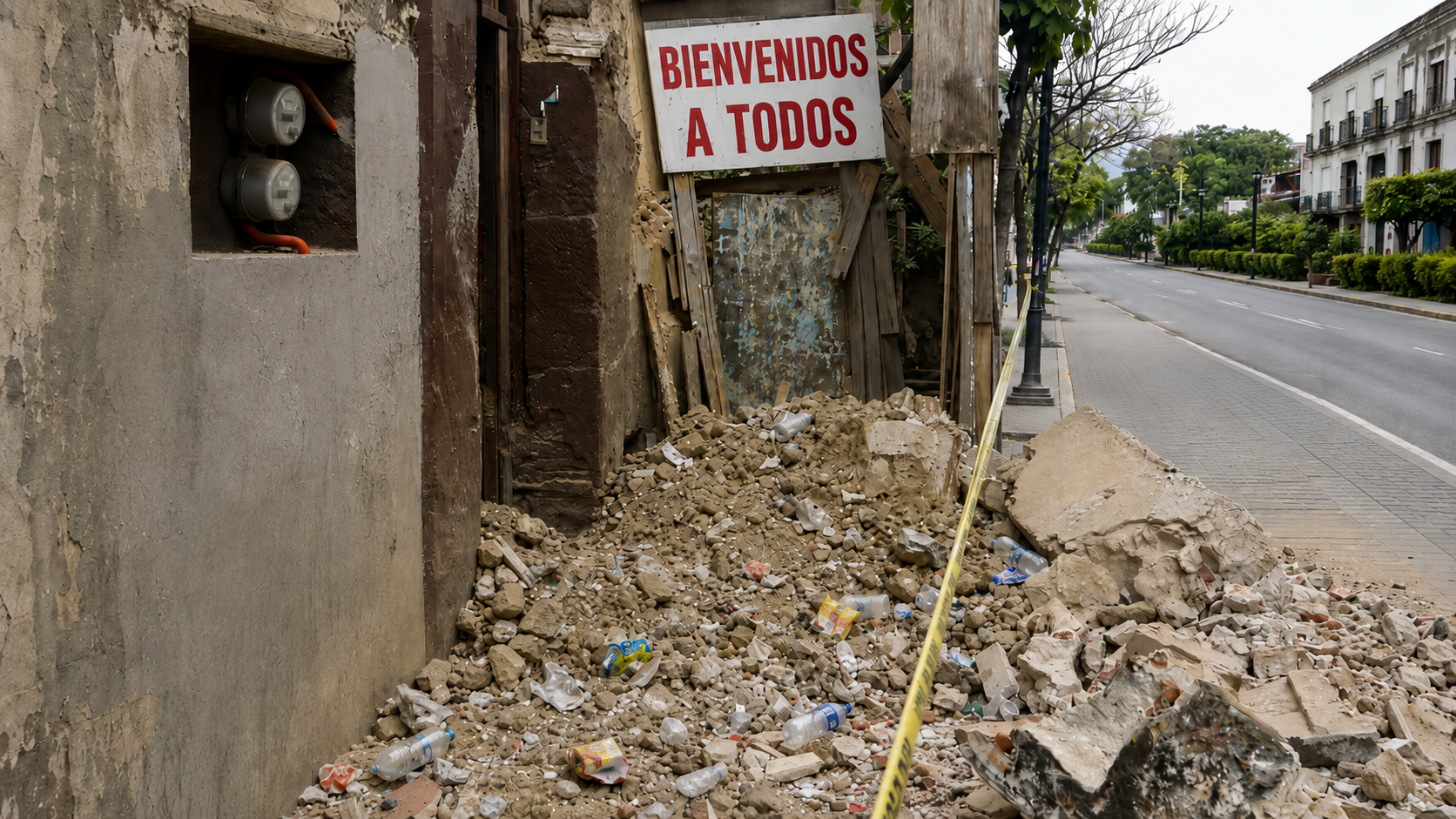
On Friday morning, the seafloor off southern Mexico lurched. A magnitude 7.3 earthquake, reported in some early bulletins as high as 7.4, struck off the coast of Chiapas near the Guatemala border, at a shallow depth of about 10 kilometers, according to the U.S. Geological Survey. The Pacific Tsunami Warning Center warned that hazardous waves up to a meter above the tide were possible along coastlines within 300 kilometers of the epicenter. About an hour later, the alert was lifted. Authorities reported no major damage and no deaths, even as more than 30 aftershocks, one as strong as magnitude 6.8, rolled through Chiapas and Oaxaca.
This time, the sea stayed put. But the warning is a reminder that Mexico's Pacific coast is one of the most tsunami-prone shorelines in the Americas, and it raises a question that gets less attention than the damage on land: when a tsunami does come ashore, what does it do to the ocean itself?
A Coast Built for Tsunamis
Mexico's west coast rides the edge of a subduction zone, the Middle America Trench, where the Cocos plate grinds beneath North America and, every so often, snaps. The worst tsunami in the country's recorded history came in 1787, when the great San Sixto earthquake, estimated at magnitude 8.6, struck off Oaxaca. By historical accounts, the waves surged as far as 6 kilometers inland, a reach almost unimaginable on that coast. In 1932, a tsunami with waves reported up to 10 meters nearly erased the town of Cuyutlan in Colima, killing roughly 50 people and injuring hundreds. The 1985 disaster is remembered for the thousands who died when buildings collapsed in Mexico City, far inland, but its tsunami was comparatively modest, around 3 meters on the coast at Lazaro Cardenas. A decade later, in 1995, another magnitude 8 quake sent waves of up to 5 meters into Manzanillo.
So a tsunami's power on land is not in doubt. Its effect on the sea is stranger, and more counterintuitive.
Why the Open Ocean Barely Notices
A tsunami is nearly nothing in deep water. Out in the open ocean, the wave is a low, fast swell, often less than a meter high, that a boat may cross without anyone aboard noticing. It only rears up into a wall of water when it reaches the shallows and the seafloor forces its energy upward. That means the animals most people picture fleeing, the whales, dolphins, sea lions, and tuna of the open ocean, have little to flee from. Offshore, they ride out a tsunami the way they ride any swell.
As for whether animals sense what is coming, the honest answer is that the famous stories, of elephants and birds bolting to high ground before the 2004 Indian Ocean tsunami, are mostly from land and mostly anecdotal. Animals may feel the earthquake's seismic waves, which travel faster than the water, but for creatures out in the deep sea there is little reason to run, because the deep sea barely registers the wave at all. The devastation is a coastal story, concentrated in the shallow, bottom-attached life that cannot get out of the way.
The Damage Is a Shallow-Water Story
There, the damage is real. As the wave and its powerful backwash tear across the shallows, they scour sediment off the seafloor, snap and topple corals, uproot seagrass meadows and kelp, and bury the benthos, the clams, urchins, sponges, and worms that live on the bottom, under sediment and debris. Fish and invertebrates trapped in bays and estuaries can be killed outright or swept out to sea. After the 2011 Tohoku tsunami in Japan, researchers found the wave had stripped sediment from the seabed and dumped it elsewhere as enormous underwater sand dunes, rearranging entire soft-bottom communities.
How Fast the Sea Recovers
Yet the sea proves remarkably hard to keep down. When scientists surveyed the reefs of the Indian Ocean after the catastrophic 2004 tsunami, they found that even off Aceh, where the wave was most ferocious, the direct damage to coral was surprisingly patchy. Much of the harm came not from the water itself but from sediment and land debris smothering the reef afterward. And recovery tends to be measured in years, not decades. Studies following both the 2004 and 2011 tsunamis found that marine ecosystems showed great resilience, with many communities rebounding within a few years and damaged corals regenerating roughly four years on. A five-year underwater survey of the Japanese coast after 2011 tracked bottom-dwelling life returning across the monitoring period, rather than staying barren. Lasting depletion, when it happens, usually owes more to the debris, pollution, and chronic human pressure that follow a disaster than to the wave.
One strange afterlife of the 2011 tsunami showed just how far the sea carries its wreckage. The wave swept docks, boats, and debris out into the Pacific, and clinging to them were the animals of the Japanese coast. Over the following years, researchers documented nearly 300 Japanese species, from mussels to sea slugs, rafting all the way across the ocean and washing up alive on the beaches of North America, a slow-motion biological crossing no one had seen before.
On Friday, Mexico was spared. The alert expired, the aftershocks faded, and the coast of Chiapas went back to its morning. Had the wave come, the beaches and the shallow reefs would have taken the blow, and the open water beyond them would have hardly flinched. The trench offshore will move again someday. The ocean, as it has after every tsunami before, would set about repairing itself.
Sources
- CBS News, "Powerful earthquake hits Mexico-Guatemala border, triggering temporary tsunami alert" (July 17, 2026), https://www.cbsnews.com/news/earthquake-mexico-guatemala-tsunami-alert/
- CNN, "Powerful earthquake in Mexico shakes Guatemala and El Salvador" (July 17, 2026), https://edition.cnn.com/2026/07/17/americas/mexico-earthquake-chiapas-intl-latam
- IntechOpen, "The Risk of Tsunamis in Mexico", https://www.intechopen.com/chapters/73726
- "The great 1787 Mexican tsunami", https://www.academia.edu/35742190/The_great_1787_Mexican_tsunami
- Coral Reef Studies (ARC Centre of Excellence), "Reef recovery in the wake of the Indian Ocean Tsunami", https://www.coralcoe.org.au/legacy/index.html@p=2230.html
- PMC, "Recovery of Coastal Fauna after the 2011 Tsunami in Japan as Determined by Bimonthly Underwater Visual Censuses Conducted over Five Years", https://pmc.ncbi.nlm.nih.gov/articles/PMC5152922/