

The El Niño Arrivals: A Complete Accounting of What Warm Water Has Brought to Southern California
Whale sharks, 3 filmed hammerhead encounters, 5 separate orca days, 18 logged Bryde's whales, and flying squids. Learn why they’re here and what we can expect in the coming days to months.
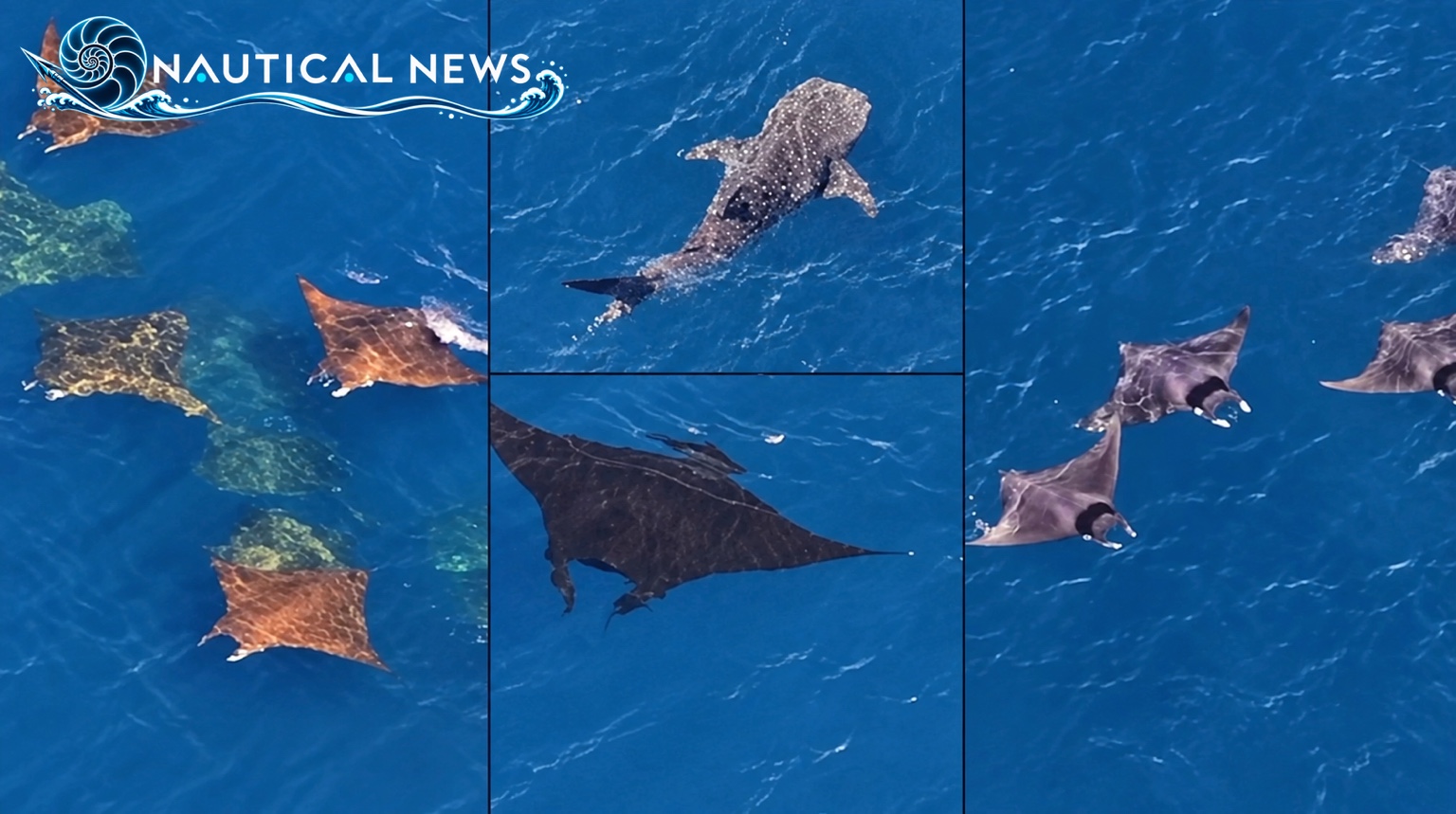
On September 9, a pilot named Carl Sbarounis flew out over the water between Santa Barbara Island and Malibu, found what a spotter named Ryder DeVoe had located from the surface, and filmed a whale shark of 14 to 16 feet (4 to 5 meters) moving through California water. Whale sharks are the largest fish in the ocean, they feed by straining plankton through gill rakers, and they live in the tropics. Southern California has recorded them in September 2022 and in December 2023, and the list is short enough to keep in a sentence.
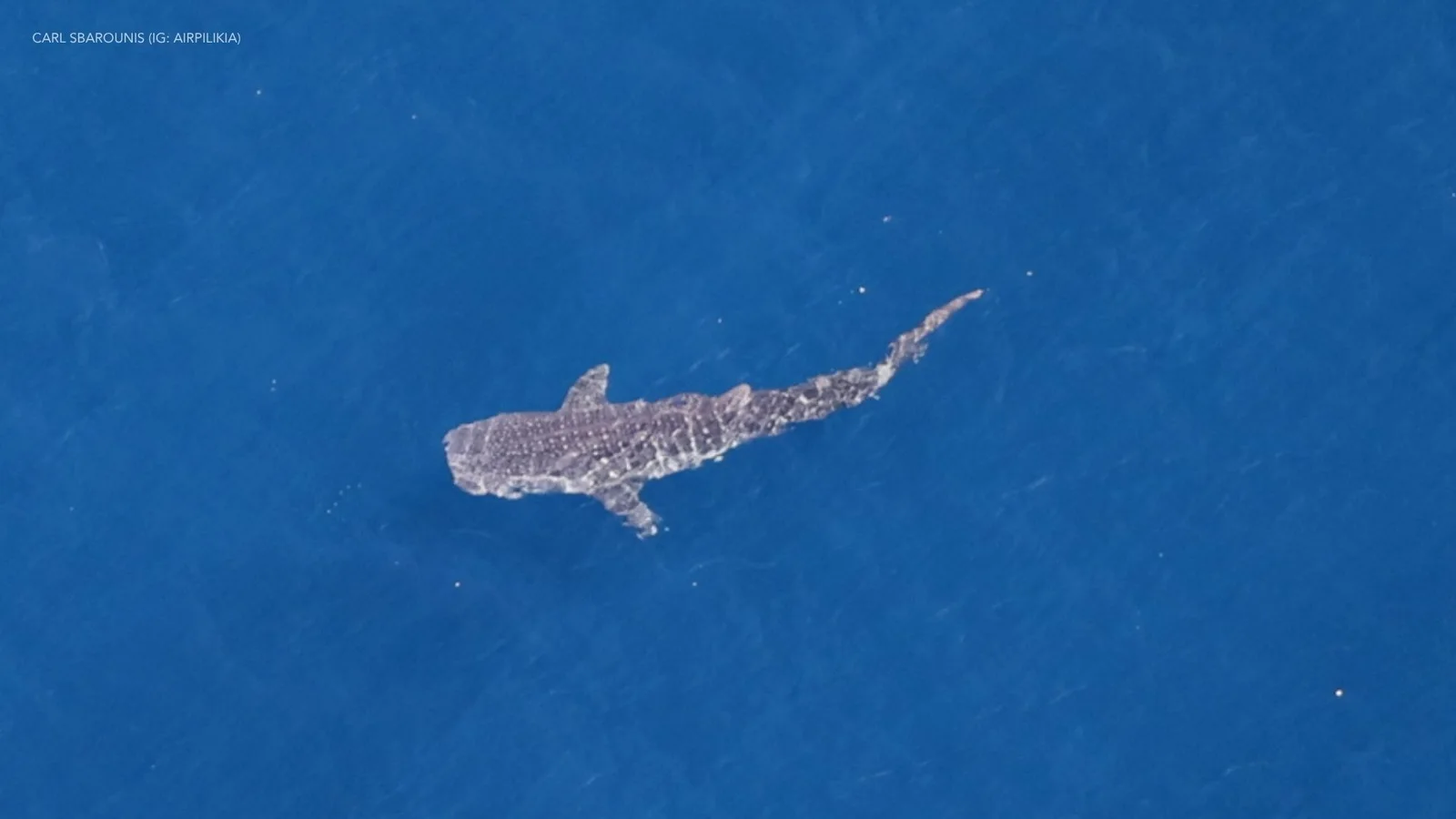 The whale shark filmed on September 9, 2026, between Santa Barbara Island and Malibu. Photo: Carl Sbarounis (Instagram: airpilikia).
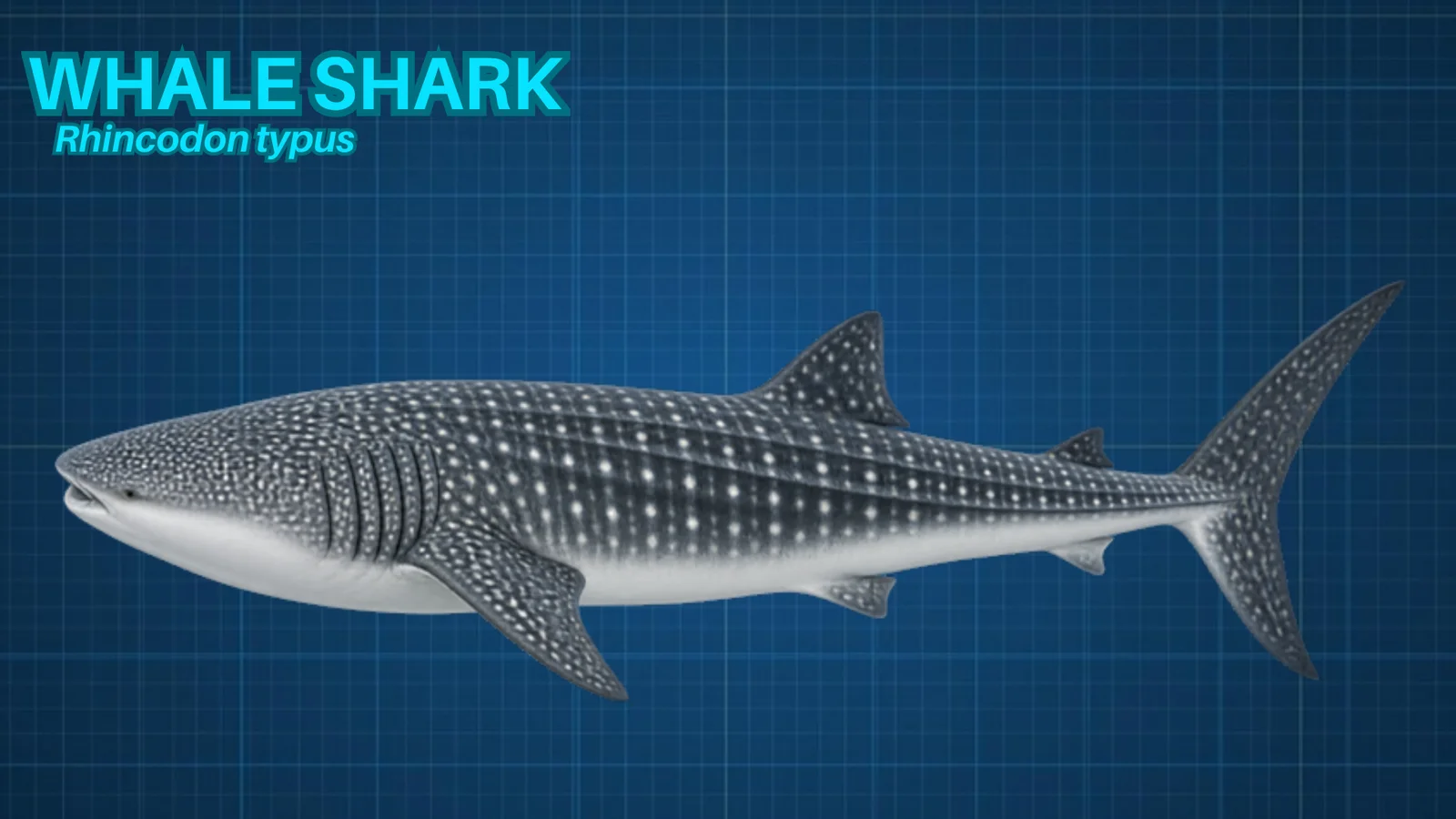 Whale shark. Filmed on September 9, 2026, between Santa Barbara Island and Malibu by pilot Carl Sbarounis, after spotter Ryder DeVoe located it from the surface. Normal range: tropical and warm temperate seas around the globe.
The whale shark is the headline animal in a season that has produced far more than 1 headline. Since May, observers off this coast have filmed hammerhead sharks on at least 3 separate occasions from Santa Barbara County to Laguna Beach, logged Eastern Tropical Pacific killer whales on 5 different days off San Diego, recorded 18 Bryde's whales in a single operator's ledger, watched devil rays of at least 3 species from Catalina to the Nine Mile Bank, and reported squid launching themselves clear of the water near San Nicolas Island. Sea surface temperatures are running 3 to 5 degrees above average and pushing 80 degrees Fahrenheit (27 degrees Celsius). And on September 3, NOAA Fisheries published a caution that almost none of the coverage has carried: the animals arriving are among the weakest available evidence for deciding whether El Niño is responsible for any of it.
What Is Actually Warming the Water
Separate phenomena are heating this coast, and they are being reported as a single event.
The first is a marine heatwave, meaning a prolonged stretch of abnormally warm surface water generated locally when the winds that drive coastal upwelling go slack. NOAA's California Current tracker has been following 1 such heatwave near the California coast since May 2025. That is what broke temperature records at Scripps Pier through the first half of this year.
The second is El Niño, a warming of the equatorial Pacific that reaches California indirectly and late. It arrives by 2 routes. A coastal Kelvin wave, a pulse of warm water that travels east along the equator and then turns north up the American coastline, raises coastal sea level by roughly 15 centimeters (6 inches) and pushes down the thermocline, the boundary between the warm surface layer and the cold water beneath, making upwelling less effective. Waves from this El Niño reached California in May and June. The second route is atmospheric, as El Niño shifts pressure patterns in ways that weaken the upwelling winds directly.
NOAA's heatwave tracker noted that warming off southern California during the week of August 15 "may finally be the result of some more direct warming due to El Niño drivers." Scripps Institution of Oceanography, in an assessment published August 19, anticipated a larger El Niño influence arriving in fall 2026 and winter 2026 into 2027. Out in the eastern tropical Pacific, temperatures are running more than 2 degrees Celsius (3.6 degrees Fahrenheit) above normal.
The practical consequence is that a tropical animal off Malibu is consistent with El Niño and does not demonstrate it. Warm-water species shift north during either phenomenon. NOAA Fisheries now classifies fish distribution shifts as a less reliable indicator than they used to be, specifically because species like dorado, striped marlin, and yellowfin tuna already extended their range north during the marine heatwaves of recent years. They were on their way before this El Niño existed.
The Sharks
Beyond the September 9 whale shark, hammerheads account for the best-documented shark encounters of the season, and each has a named observer and footage.
On August 13, a fisherman named Ari Kohanchi filmed a hammerhead roughly 100 yards off Malibu Pier, near Surfrider Beach. The species within the hammerhead family was not firmly established in the coverage.
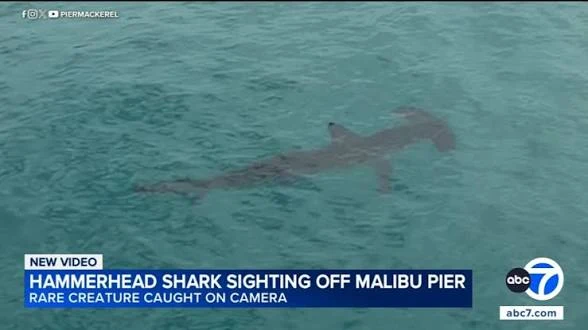 The hammerhead filmed off Malibu Pier on August 13, 2026. Video frame: piermackerel, via ABC7.
On August 16 or 17, depending on which outlet is read, Juan Morales of Sky Angel Drones captured aerial footage of a hammerhead off Gaviota Beach in Santa Barbara County. KEYT places it on Sunday, implying August 16; Edhat gives August 17. It is 1 encounter, not 2.
Over the weekend preceding August 24, Mark Girardeau of Newport Coastal Adventure filmed a hammerhead roughly 1 mile off Laguna Beach.
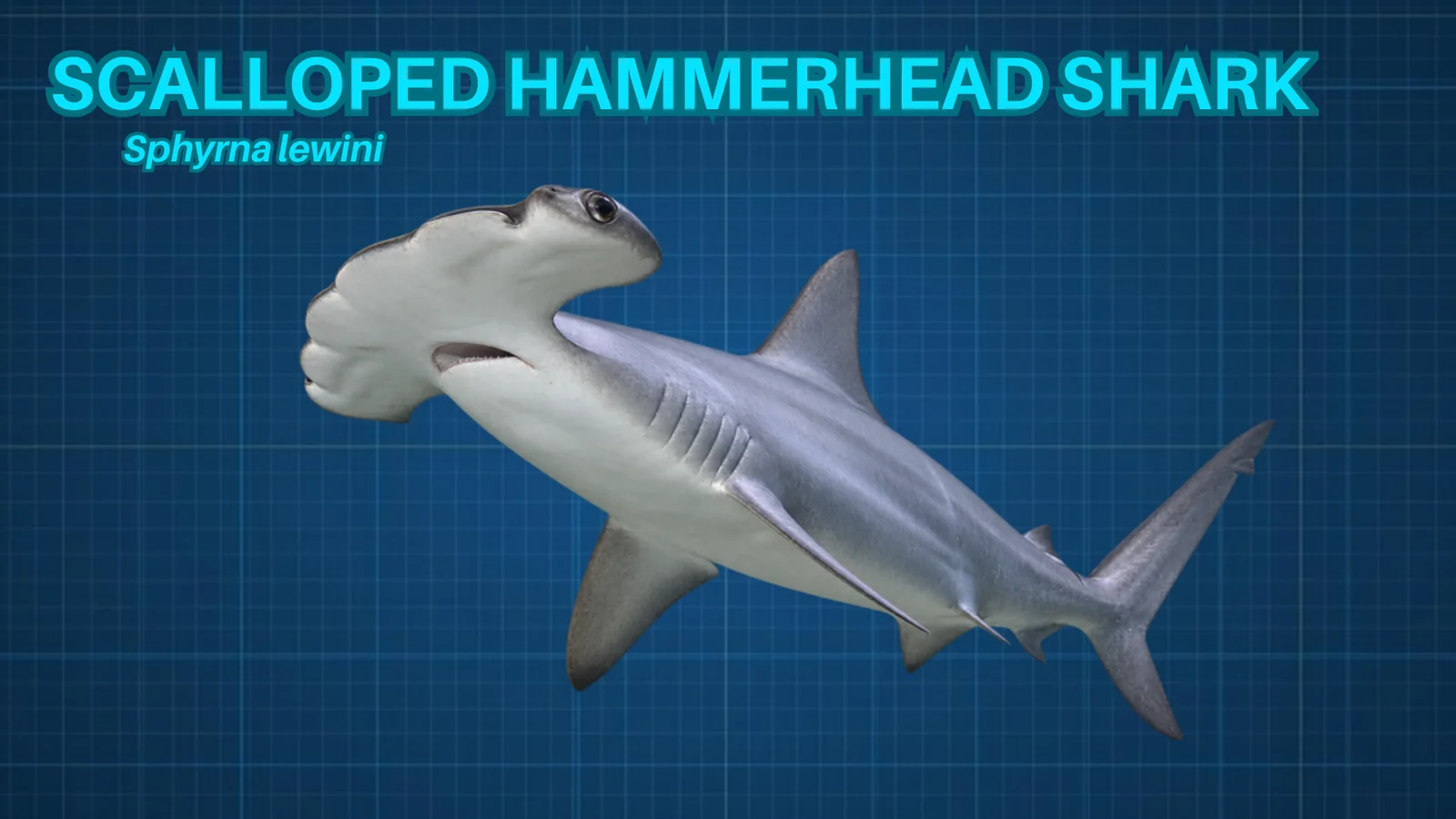 Scalloped hammerhead shark. Hammerheads were filmed 3 times in 2026: off Malibu Pier by Ari Kohanchi on August 13, off Gaviota Beach by Juan Morales on August 16 or 17, and off Laguna Beach by Mark Girardeau on the weekend before August 24. This article does not assign those animals to a species. The scalloped hammerhead shown here is the species recorded in San Diego Bay during the 1997 to 1998 El Niño. Normal range: southern California to Ecuador in the eastern Pacific.
Bull sharks and tiger sharks have appeared in forecasts of what warm water might bring to San Diego this summer. No verified Southern California encounter with either has surfaced.
The Rays
Mobulid rays, the family that includes mantas and devil rays, have produced the largest number of separate reports this season, and the identifications vary in confidence.
Juan-Carlos Aguilar was spearfishing off Catalina Island when a school of sicklefin devil rays came through. "They were just moving very graciously as they do and looking like stealth bombers of the sea," he told ABC7. Aguilar has fished this coast for 15 to 20 years, and by his count this was the second or third time he has seen them.
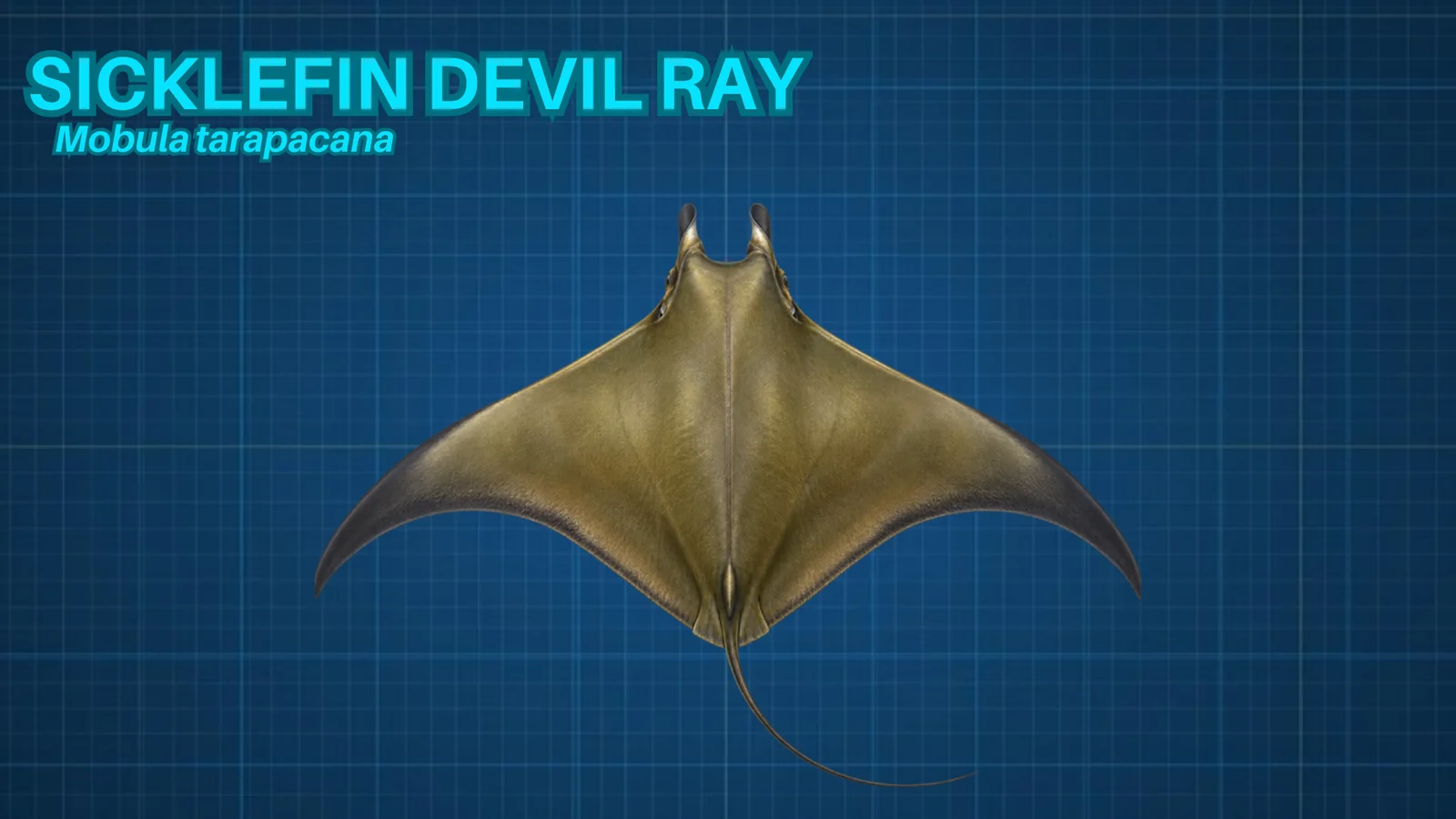 Sicklefin devil ray. A school passed spearfisherman Juan-Carlos Aguilar off Catalina Island, an encounter he described to ABC7 in a report published September 12, 2026. The date of the encounter was not reported. Normal range: tropical waters worldwide, and lower Baja California to Chile in the eastern Pacific.
Sbarounis logged rays from the air off Newport Beach on the same flights that produced his whale shark footage, including sicklefin, spinetail, and a solitary animal reported as a bentfin devil ray. Those aerial identifications come from the observers themselves, with no independent taxonomic review, and the bentfin in particular should be treated as provisional.
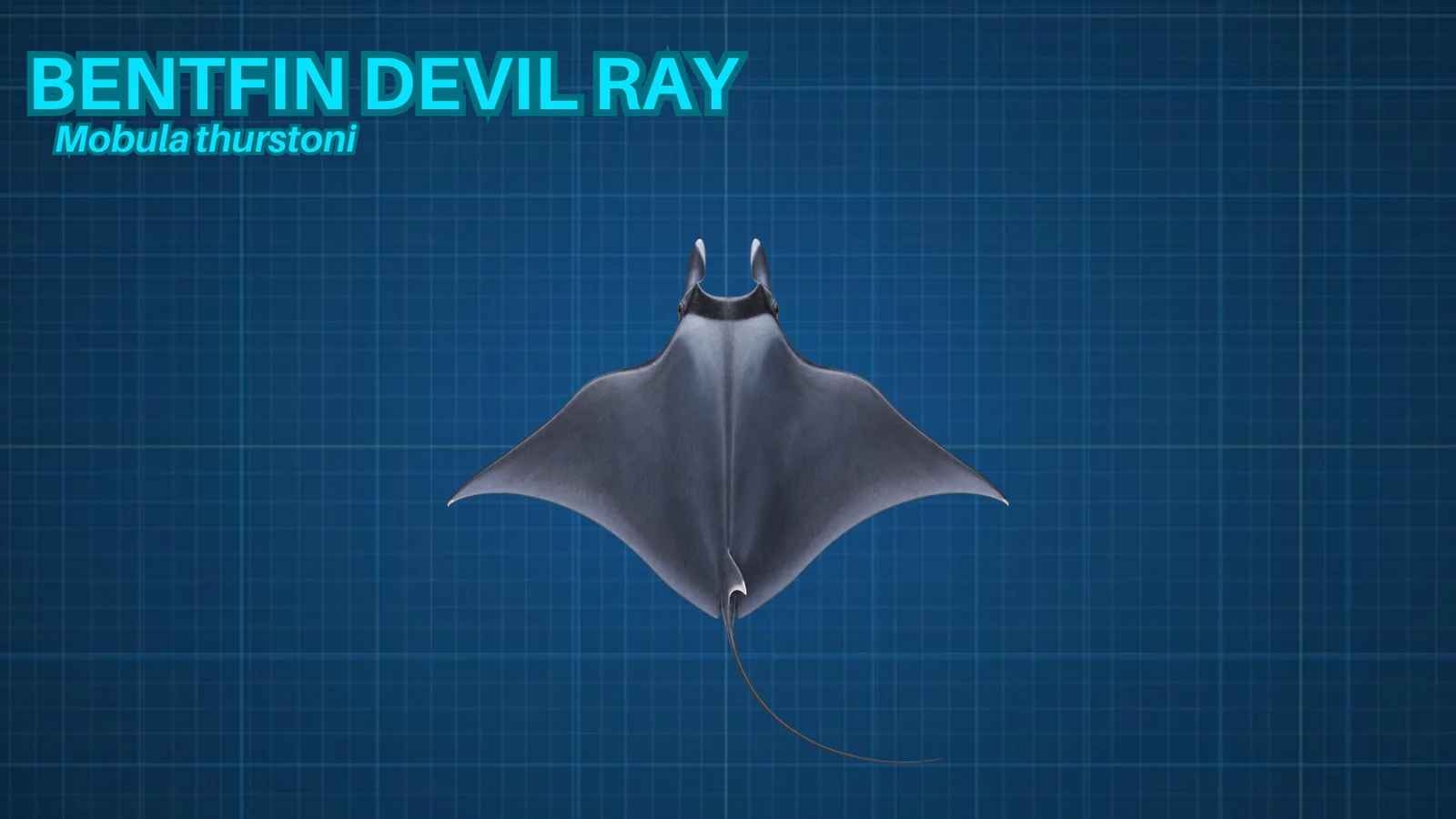 Bentfin devil ray. A single animal was reported from the air off Newport Beach by pilot Carl Sbarounis in 2026, with no exact date given. The identification is provisional. Normal range: tropical seas worldwide, and the Gulf of California to Chile in the eastern Pacific.
Off San Diego, roughly 12 spinetail devil rays were filmed near the Nine Mile Bank by Ryan Lawler and Sbarounis. San Diego Whale Watch naturalists logged mobulids on 3 separate days: 3 spinetail mobulas near the surface on September 9, repeated breaching southwest of Mission Bay on September 11, and more breaching beyond the drop-off on September 13.
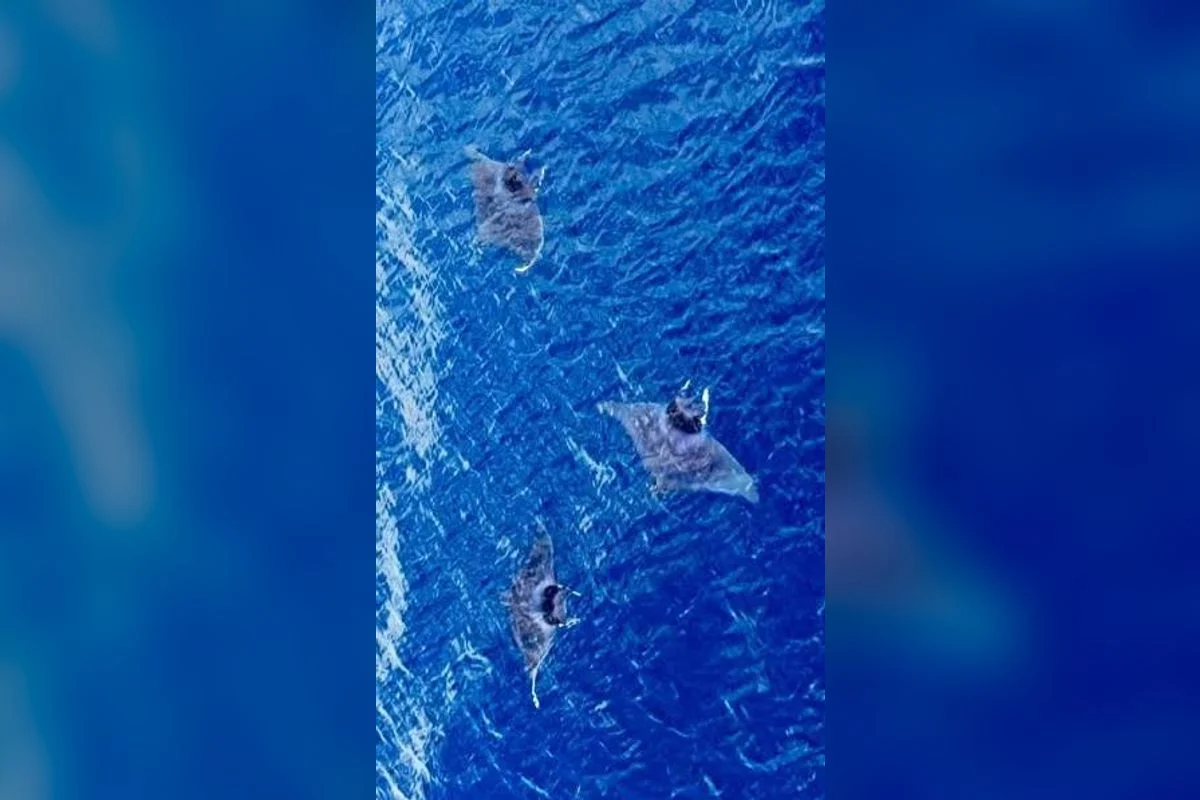 Spinetail devil rays filmed from the air off San Diego in 2026. Video frame: Big Blue Photo Expeditions.
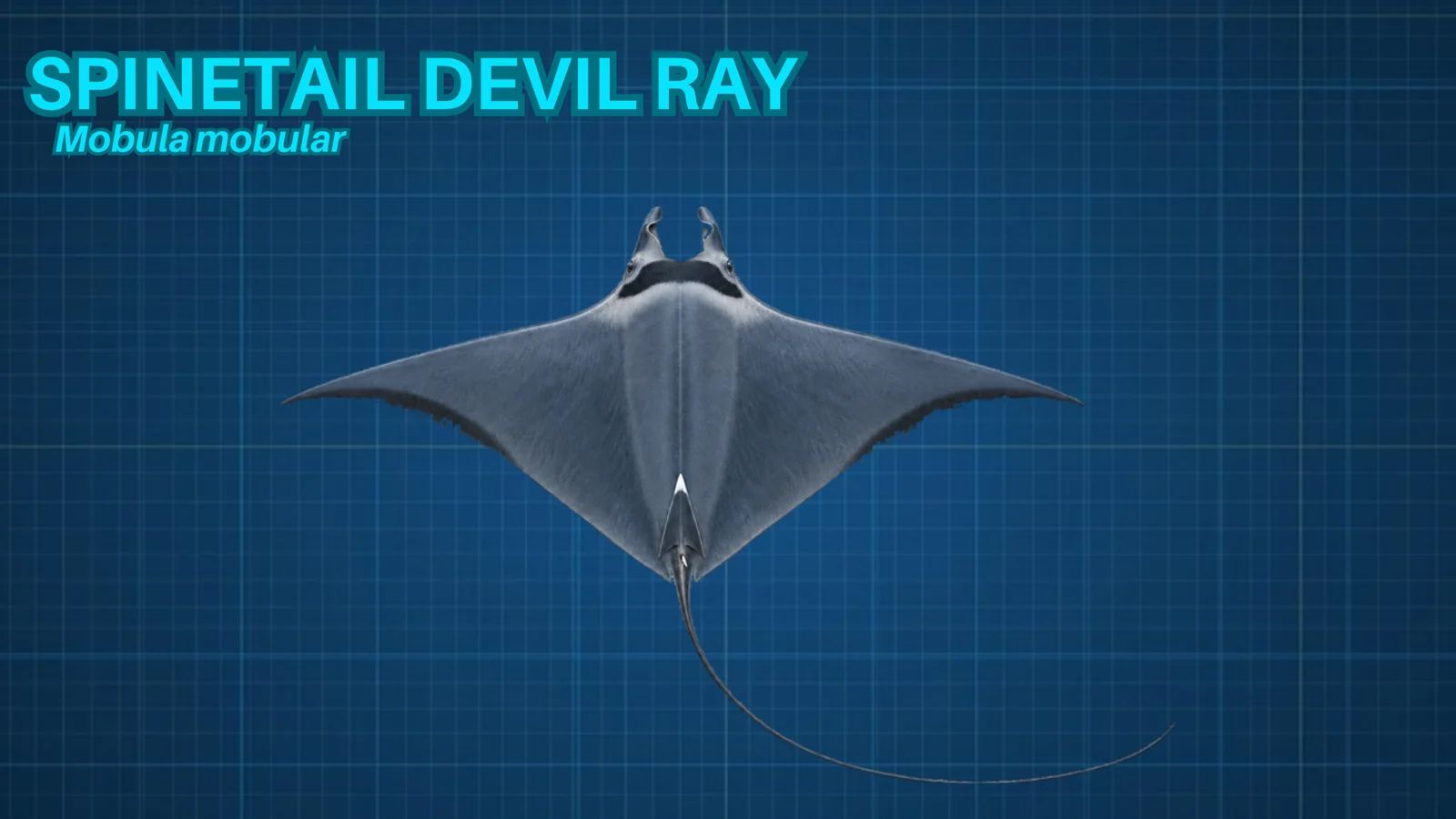 Spinetail devil ray. Roughly 12 were filmed near the Nine Mile Bank off San Diego by Ryan Lawler and Carl Sbarounis, and San Diego Whale Watch naturalists logged 3 near the surface on September 9, 2026. Normal range: tropical and warm temperate waters worldwide, recorded from Oregon to Chile in the eastern Pacific.
The sicklefin devil ray (Mobula tarapacana) makes an odd animal for a heat story, because it is built for the opposite condition. Sicklefins are the deepest-diving members of their family, documented to 2,000 meters (6,562 feet), where water temperature falls below 4 degrees Celsius (39 degrees Fahrenheit). An animal that routinely drops into near-freezing water is now cruising a 27-degree surface layer off Catalina.
Both named ray species carry conservation weight. According to a World Wide Fund for Nature assessment, a 2016 reassessment elevated the sicklefin devil ray to Vulnerable globally and to Endangered in 3 ocean regions, 1 of which is the Eastern Pacific. The same assessment documented local catch declines of up to 96 percent for sicklefin and spinetail devil rays in the Indo-Pacific across 10 to 15 years despite increased fishing effort, driven by the trade in dried gill plates, the feathery structures mobulids use to strain plankton from the water.
The Whales
Newport Landing, which runs whale watching trips daily out of Newport Beach, logged 18 Bryde's whales across the season through mid-September. Bryde's whales are warm-water baleen whales that occupy waters above roughly 68 degrees Fahrenheit (20 degrees Celsius) and have historically been scarce off California. The operator's dated entries run: 1 on May 20, 1 on June 6, 2 on June 9, 1 on June 10, 2 on June 27, 8 on July 1, 1 on July 14, and 2 on July 30. The July 1 entry is the striking one. These are operator identifications from a commercial fleet working its normal routes, with no standardized survey effort behind them, so the log establishes presence without establishing an increase against a historical baseline.
The killer whales are a different matter, because the population was identified.
San Diego Whale Watch logged Eastern Tropical Pacific orcas roughly 7 miles off San Diego on August 30, counting about 12 animals. On September 1 the crew found 8 to 10, including calves, after a tip that originated south of the Mexican border. On September 2, orcas were observed hunting dolphins less than 2 miles from the San Diego coast. On September 9, 5 or 6 including calves were logged before the group crossed into Mexico. On September 12, another 8 to 10 were recorded taking dolphins during a sunset trip.
The August 30 and September 1 logs explicitly identify the animals as Eastern Tropical Pacific orcas, a warm-water population distinct from the mammal-eating Bigg's killer whales that visit this coast routinely. The later logs record orcas without independently establishing pod identity, and the same animals may account for several of these days.
A Guadalupe fur seal was also reported during the September 1 orca outing.
The Fish and the Squid
The strangest report of the season came from sportfishing. By August 30, Eugene Wessel aboard the New Lo-An near San Nicolas Island reported approximately 40 to 45 squid launching clear of the water and gliding, with captain Markus Medak corroborating the behavior. The report ran under a headline that captured the experience: "I Thought They Were Birds." A proposed identification as neon flying squid came from the writer who filed the report, with no specimen or expert review behind it.
Dorado, also called mahi-mahi, have appeared repeatedly. Singles turned up near San Clemente Island in June. On July 16 the Sport King caught 1 while anchored at Catalina Island, which is unusual enough as a method that it drew its own coverage. On August 29, private boaters out of Oceanside reported dorado along with skipjack and bonito 17 to 20 miles off Solana Beach, and a separate trolling report produced another off Catalina.
A striped marlin was caught aboard the Gail Force on a Catalina trip on July 16, and San Diego Whale Watch logged 1 on September 14. Separately, NOAA reports that a striped marlin taken off Washington in August set a state record, which is the single most improbable data point of the year.
Yellowfin tuna of 20 to 60 pounds (9 to 27 kilograms) were reported about 10 miles off Newport Beach in mid-August.
Flying fish have been abundant. A single San Diego tour counted at least 30 southwest of Mission Bay on September 11, with repeated groups again on September 13.
Wahoo requires a caution that most coverage has skipped. A report on August 15 described a catch aboard the San Diego along with at least 3 recent catches within roughly 60 miles of the city, while stating explicitly that no catches in United States waters had yet been confirmed. A follow-up on August 29 named the Islander and Little G reporting wahoo in "local waters" without enough location detail to place them north of the border. Wahoo are in the region. Whether they are in California is a separate question that the available reporting does not settle.
What Has Not Arrived
A pair of absences is worth as much attention as the arrivals.
The yellow-bellied sea snake, a venomous tropical species that spends its life at the surface of the open ocean, has been the subject of warnings all summer. No verified Southern California encounter has been documented in 2026. The historical record is instructive: a specimen came ashore at Oxnard on October 16, 2015, another at Huntington Beach on December 12, 2015, and a third at Coronado on January 12, 2016, all during the last strong El Niño. Douglas McCauley, director of the Benioff Ocean Initiative at the University of California, Santa Barbara, framed the broader pattern this way: "Some of these kinds of interesting oddities that are never a part of California will become part of this temporarily tropical El Niño-heated California."
Pelagic red crabs, the swarming crustaceans that carpeted San Diego and Los Angeles beaches in June 2015, are the classic Southern California warm-water indicator. NOAA acknowledges reports along the West Coast this year without describing a Southern California event, and without the abundance a strong warm period normally produces. A signal that should be loud is quiet.
What Is Being Miscounted
Several widely covered stories belong in a different category, and conflating them inflates the picture.
Round stingrays produced a surge of nearshore encounters and stings in Orange County and San Diego this summer. They are familiar local animals. More human contact with a resident species is a different phenomenon from the arrival of an exotic one.
Humpback whales have been feeding within a few hundred yards of the beach at Newport and Palos Verdes. Humpbacks are normal regional visitors; the unusual element is how close they are working, not that they are here.
By-the-wind sailors washed ashore along the coast this spring, including a publicized mass stranding at Santa Barbara. These are wind-driven strandings and do not by themselves indicate a warm-water influx.
Sea turtles appear in operator logs from March through June without species identification. A sperm whale appears once, on June 21. Neither establishes a warm-water range shift.
The Benchmark
The comparison everyone reaches for is 1997 and 1998, catalogued by the ichthyologists Robert Lea and Richard Rosenblatt for CalCOFI Reports. They documented 29 families of Panamic fishes, the tropical assemblage normally found from Baja south, off California during that event, including 10 species never previously recorded in the state. Among them were at least 10 juvenile scalloped hammerheads taken in San Diego Bay between April 1997 and January 1998, all under 3 feet (1 meter).
The more recent and better-matched comparison is the warm period from 2014 through 2018. Walker and colleagues documented unusual occurrences of 36 fish species across that span, including 14 first records for the Southern California Current System. That is a multi-year scientific inventory across a large region, not a list of animals seen from a beach in a single summer, and the distinction matters when the 2026 tally is eventually written.
The 2015 record also reads like a preview. Pelagic red crabs swarmed from San Diego to Los Angeles in June. A spotfin burrfish turned up in Santa Monica Bay in August. Cardinalfish appeared off San Diego. Divers reported finescale triggerfish and Guadalupe cardinalfish on local reefs. California's own incident ledger records hammerheads at Deer Creek near the Malibu and Ventura line on September 5 and at Yellow Banks off Santa Cruz Island on September 20. A whale shark was photographed near Catalina that September. A wahoo was encountered underwater at a Catalina dive site in October.
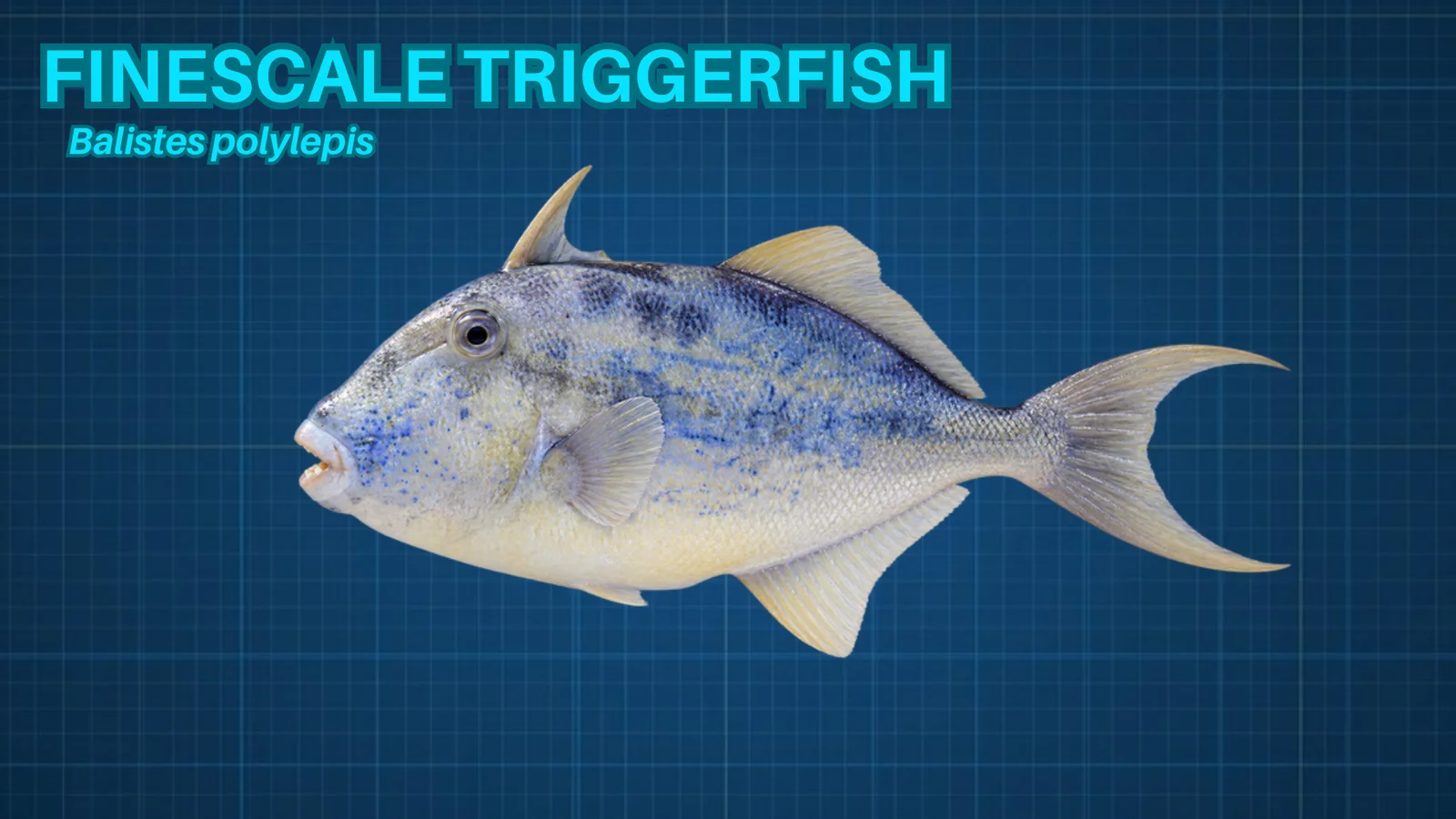 Finescale triggerfish. Divers reported it on Southern California reefs during the 2015 warm period. No 2026 report appears in this accounting. Normal range: northern California to Chile, including the Gulf of California.
Every category on this year's list has a 2015 counterpart, which is the strongest argument that the pattern is real and the weakest argument that this particular El Niño caused it.
What Is Solid and What Is Not
The encounters themselves are the firm part. A whale shark was filmed. Hammerheads were filmed 3 times by named people. Orcas from a warm-water population were identified on at least 2 of 5 logged days. Bryde's whales were logged 8 times by an operator who counts whales for a living. Squid left the water near San Nicolas Island in front of a boat full of witnesses.
What remains open is nearly everything else. Exact species assignments vary in confidence, several reports may describe the same animals on different days, counts from boat logs record encounters and may repeat the same individuals, and the cause of any single arrival is unproven.
Nate Jaros, vice president of animal care at the Aquarium of the Pacific, expects the unusual species to hold through early October before moving south. Chris Lowe, the shark researcher, has warned boaters to watch for surface-feeding whale sharks, since a high-speed collision carries consequences for both parties. NOAA's Climate Prediction Center has put the odds of a very strong El Niño during November through January at 63 percent, and in 1997 reports of tropical fishes off California became frequent around midsummer and continued through the end of 1998.
If that pattern repeats, this catalog is an early draft.
Sources
- NOAA Fisheries, "Ocean Indicators We're Tracking for El Niño's Arrival on the West Coast," September 3, 2026, https://www.fisheries.noaa.gov/feature-story/ocean-indicators-were-tracking-el-ninos-arrival-west-coast
- Scripps Institution of Oceanography, "How Does El Niño Impact Ocean Ecosystems," August 19, 2026, https://scripps.ucsd.edu/news/how-does-el-nino-impact-ocean-ecosystems
- NOAA Integrated Ecosystem Assessment, California Current Marine Heatwave Tracker, https://www.integratedecosystemassessment.noaa.gov/regions/california-current/california-current-marine-heatwave-tracker-blobtracker
- ABC7 Los Angeles, "El Niño conditions bringing unusual sea creatures to Southern California coast," September 12, 2026, https://abc7.com/post/el-nino-conditions-bringing-unusual-sea-creatures-southern-california-coast/19823709/
- For The Win, whale shark encounter coverage, https://www.aol.com/articles/world-largest-shark-latest-exotic-025013000.html
- Canyon News, hammerhead off Malibu Pier, https://www.canyon-news.com/rare-hammerhead-shark-sighting-off-the-malibu-pier/
- KEYT, "Drone captures incredible sight of hammerhead shark off Gaviota coast," August 18, 2026, https://keyt.com/lifestyle/animals/2026/08/18/drone-captures-incredible-sight-of-hammerhead-shark-off-gaviota-coast/
- Patch, hammerhead off Laguna Beach, August 24, 2026, https://patch.com/california/lagunabeach/amp/34700702/rare-hammerhead-shark-sighting-off-laguna-coastline-sparks-intrigue
- SURFER, spinetail devil rays off San Diego, September 11, 2026, https://www.surfer.com/news/spinetail-devil-rays-san-diego-video
- San Diego Whale Watch, dated sightings logs, August 30 through September 14, 2026, https://sdwhalewatch.com/recent-sightings/
- Newport Landing Whale Watching, 2026 whale count and daily sightings log, https://newportwhales.com/whalecount.html
- Friedman Adventures, Southern California fishing news and captain reports, https://friedmanadventures.com/news
- Manta Trust, sicklefin devil ray (Mobula tarapacana) species guide, https://www.mantatrust.org/mobula-tarapacana
- World Wide Fund for Nature, "Mobula rays, also known as devil rays" factsheet, https://wwfint.awsassets.panda.org/downloads/mobula_rays_factsheet.pdf
- Surfer, "Super El Niño Could Unleash Venomous Sea Snakes and Hammerheads on California," August 10, 2026, https://www.surfer.com/news/super-el-nino-venomous-sea-snakes-hammerheads
- Natural History Museum of Los Angeles County, "El Niño and Yellow Snakes," https://nhm.org/stories/el-nino-yellow-snakes
- Divers Alert Network, "A Perfect Storm of Warm," https://dan.org/alert-diver/article/a-perfect-storm-of-warm/
- California Department of Fish and Wildlife, shark incident records, https://nrm.dfg.ca.gov/FileHandler.ashx?DocumentID=203224
- Walker, H. J., et al., "Unusual occurrences of fishes in the Southern California Current System," 2020, https://www.scienceforconservation.org/products/unusual-occurrences-of-fishes
- Lea, R. N., and R. H. Rosenblatt, "Observations on Fishes Associated with the 1997-98 El Niño off California," CalCOFI Reports vol. 41, https://calcofi.com/publications/calcofireports/v41/Vol_41_Lea___Rosenblatt.pdf
- FOX 11 Los Angeles, "Warming waters: El Niño brings stingrays, humpback whales, and hammerhead sharks to Southern California," August 14, 2026, https://www.foxla.com/news/el-nino-brings-hammerhead-sharks-whales-southern-california
- Associated Press, round stingray coverage, August 13, 2026, https://apnews.com/article/8ed8ec6ba298cc262cc44a04cc2b5637
- FishBase, species distribution summaries for whale shark and scalloped hammerhead, https://www.fishbase.de/
- Smithsonian Tropical Research Institute, Shorefishes of the Eastern Pacific, range statements for the 3 devil rays and the finescale triggerfish, https://biogeodb.stri.si.edu/sftep/en/pages
- Big Blue Photo Expeditions, spinetail mobula ray video off San Diego, https://www.facebook.com/watch/?v=1534618998468472