

Australia Is Spending $120 Million to Create a Drone Shark Patrol Force to Cut Down on Shark Attacks
After a great white took a swimmer's arm at a Sydney beach, New South Wales is scaling up what it calls the world's largest aerial shark-surveillance program, betting on drones and AI over nets.
On the morning of Saturday, June 13, Leah Stewart, a 35-year-old primary school teacher, was swimming between the flags at Coogee Beach, in Sydney's east, when a shark struck. Rescuers pulled her from the bloodied water, a volunteer lifesaver paddling out on his board to keep her head above the surface, but she lost an arm. Authorities believe the animal was a white shark, or great white, about 3.6 meters (12 feet) long. The attack, close to shore at one of the city's busiest beaches, shook New South Wales. Weeks later, the state answered with drones.
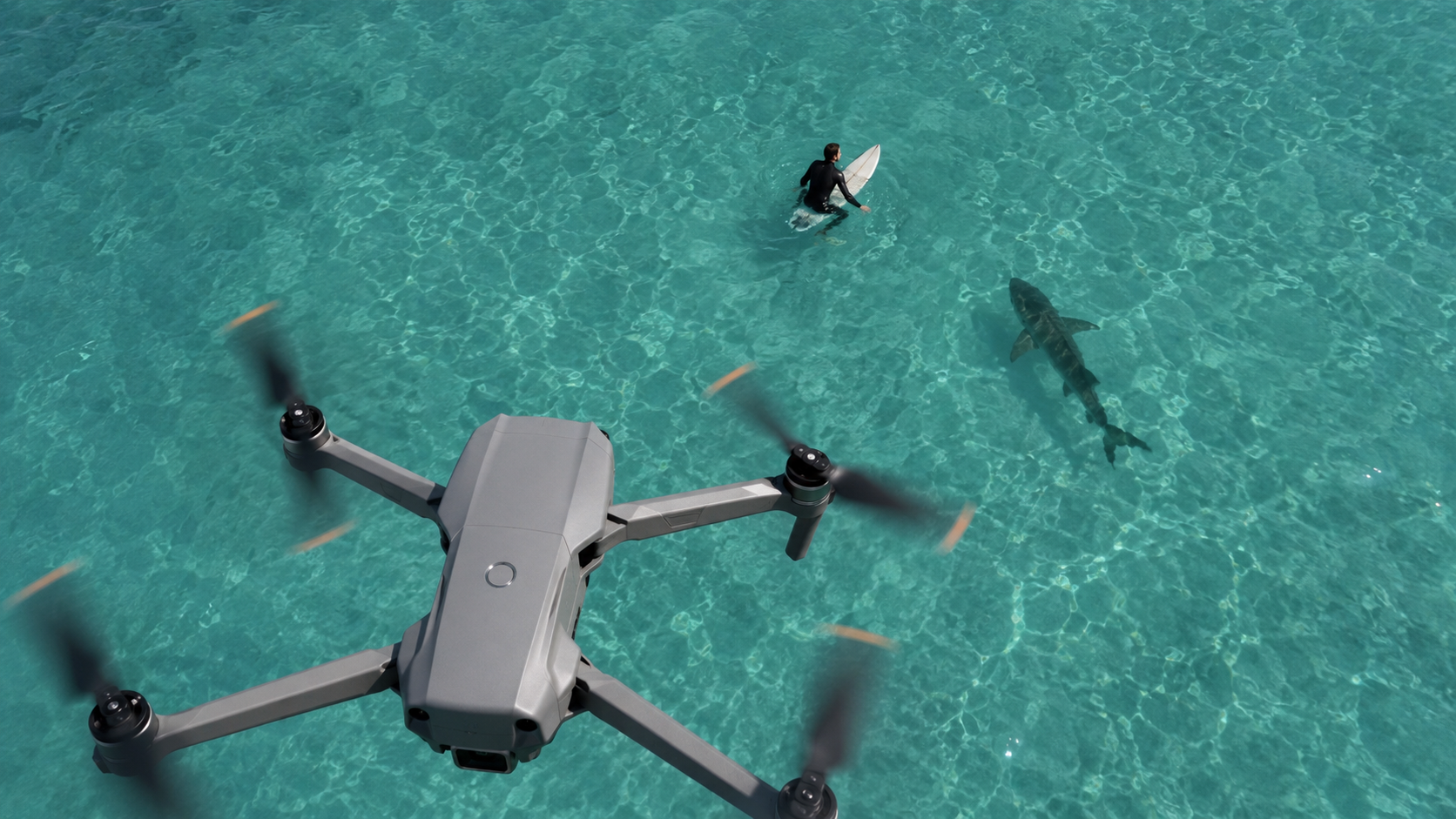
On June 28, the state government announced what it calls the largest expansion of aerial shark surveillance in the world. Around 70 beaches will get drone patrols 365 days a year, including at least one in every coastal council area, paid for with a $34 million boost to the drone program that sits inside a broader shark plan worth more than $120 million (Australian) over the next two years. The bet is on eyes in the sky, backed increasingly by artificial intelligence, rather than the nets and culls that have long defined Australian shark control.
From July 1, year-round drone coverage across Sydney's beaches expands from 26 to 38, from Palm Beach in the north to Cronulla in the south. Along the regional coast, drones will fly every weekend of the year, daily through the summer, and from dawn to dusk, and for the first time the patrols will cover popular but unpatrolled surf spots, not only flagged beaches. Two new SharkSmart listening stations in Sydney Harbour will pick up any shark carrying an acoustic tag, a small transmitter that announces the animal to a receiver it passes, and feed alerts to the warning app the state already runs along its coast.
Surf Life Saving New South Wales, which already flies the drones, will lead the expansion. The organization says its shark drones have logged more than 100,000 flights this year and flagged over 2,000 sharks near swimmers and surfers. "More drones in the air means we're getting a better picture of what's happening offshore," Premier Chris Minns said, though he was blunt about the ceiling: "no one can ever promise no shark interactions." Steve Pearce, the chief of Surf Life Saving New South Wales, called the package the largest funding commitment to shark management in Australia's history.
The money also buys a push into automation. Over the coming summer, the government will trial at least two artificial-intelligence systems built to pick a shark out of a drone's video feed faster than a human spotter can, and it is working with the country's aviation regulator toward more autonomous flights, with the eventual aim of drones launching on their own from surf-club rooftops. The goal, the government says, is to make the technology cheap and routine enough to cover more of the coast.
Drones are not a shield, and the government is candid about it. They cannot fly in strong wind or rain, they struggle to see through murky or glared water, and they must land to change batteries. Stewart was attacked close to shore, between the flags, at a beach in the middle of a major city, a reminder that even heavy surveillance leaves gaps. The expansion is built to shrink those gaps with longer hours and year-round flights, not to close them.
The drone push also marks a slow turn away from the older, bloodier tools. New South Wales has strung shark nets across its Sydney beaches since 1937, a program scientists have criticized for decades for drowning turtles, rays, dolphins, and harmless sharks while doing little to stop the animals that actually threaten people. The Coogee attack reopened the perennial argument over whether to cull sharks outright. The state's answer, for now, is to spend on watching rather than killing. It is a different wager than the one made on the other side of the country in Western Australia, which this year scrapped its trial of baited drumlines and leaned instead on tagging individual sharks. Two states, two strategies, one problem that neither can fully solve.
Stewart is recovering, and a fundraiser for her has drawn more than 300,000 Australian dollars from around the world. When the drones lift off over the Sydney beaches on the first of July, they will be flying, in part, because of what happened to her. Whether they would have spotted the shark that took her arm is the question the state is spending its millions to answer.
Sources
- Fox Weather (reference article), "After great white shark attack, Australia's most populated state doubles down on drone shark patrols" (July 11, 2026), https://www.foxweather.com/lifestyle/after-great-white-shark-attack-australias-most-populated-state-doubles-down-on-drone-shark-patrols
- NSW Government, "Major boost to shark-spotting drones to improve beach safety with $120 million shark program" (June 28, 2026), https://www.nsw.gov.au/ministerial-releases/major-boost-to-shark-spotting-drones-to-improve-beach-safety-120-million-shark-program
- Surfer, "$300k Raised for Young Mother Who Lost Arm in Great White Shark Attack" (Leah Stewart, Coogee Beach), https://www.surfer.com/news/leah-stewart-shark-attack-coogee
- The Inertia, "Australian Shark Attack Leaves Swimmer With Amputated Arm, Reopens Shark-Cull Debate", https://www.theinertia.com/surf/coogee-shark-attack/