

Why El Niño Is Spiking the Price of Copper
Copper is already at record highs on a global supply crunch. Now a strengthening El Niño threatens the Andes mines that dig 40 percent of the world's supply, and traders are watching the Pacific.
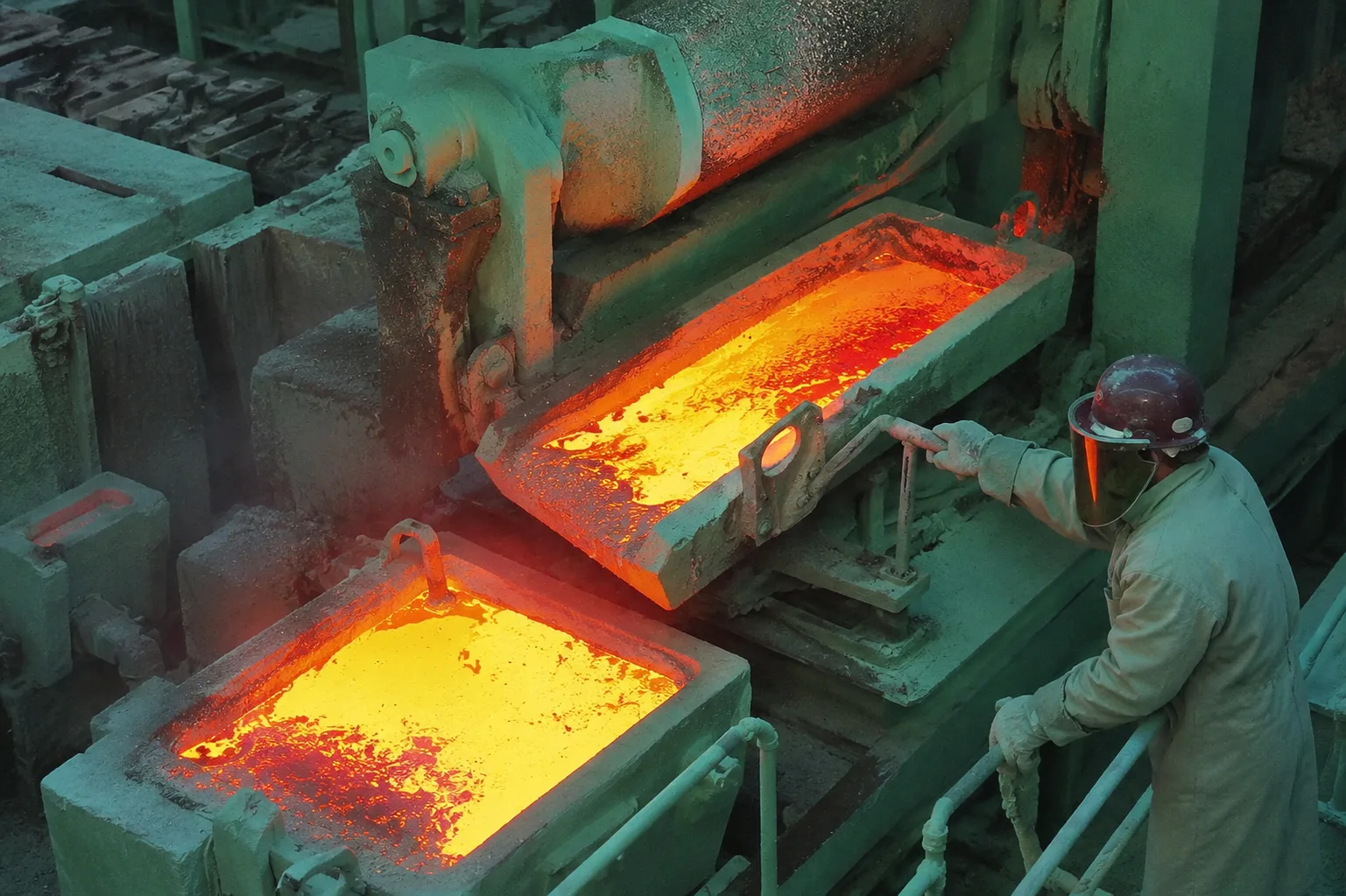
High in the Chilean Andes, the machines that crush copper ore run on water, and so do the men and towns around them. Water is exactly what a strong El Niño can wash away or bury. When the warm phase settles over the Pacific, it can dump heavy rain on the mountains where the world's biggest copper deposits sit, flooding pits, cutting roads, and stranding the trucks that haul the rock. A warm ocean thousands of kilometers away, in other words, can reach into a mine at 4,000 meters.
That matters right now because copper has almost no slack left in it. Prices have climbed above 14,000 dollars a tonne, near record territory, as the world tries to wire itself for electric cars, data centers, and clean power all at once. JP Morgan expects the refined copper market to run a deficit of about 330,000 tonnes in 2026, meaning the world will use more than it mines. Into that tight market comes a fresh supply risk: a new El Niño, forming now, over the two countries that dig most of the metal.
Chile and Peru together produce more than 40 percent of the world's copper. Chile has been the largest producer on Earth without interruption since 1983, and Peru ranks second. Their mines are also unusually exposed to weather, because pulling copper out of rock takes enormous amounts of water, and the ore is getting stingier. Average grades at Chilean mines have slid from about 1.0 percent copper to 0.66 percent, so miners must dig and process far more rock, and use far more water, to get the same metal. Water scarcity has gone from a worry to a limit on how much some mines can produce.
El Niño pushes on that limit from two directions. In the mountains, its heavy rains flood operations and close the high, narrow roads that mines depend on. At sea, it can do the opposite: during the last El Niño, drought dropped the water level in the Panama Canal so far that ships faced weight limits and surcharges, snarling the routes that carry copper to market. The metal is fragile enough already. A single rock burst at Chile's El Teniente mine erased roughly 48,000 tonnes of production in 2025 and is expected to cost tens of thousands more in 2026.
Here is the honest complication, though. Copper is not a clean El Niño story the way cocoa or palm oil is. Its price is driven first and hardest by demand, above all China's factories and the global build-out of electrification, and by the long-run shortage of new mines. Analysts who track how commodities move with the Pacific actually tie copper's clearest weather signal to La Niña, El Niño's cool opposite, not to El Niño itself. So the warm Pacific is best read as an amplifier, not the cause: a supply shock aimed squarely at Chile and Peru, landing on a market that has no cushion to absorb it.
The reach of a warm Pacific into world markets is not new. In 1972, an El Niño helped collapse Peru's anchovy fishery, then the largest on the planet, and the loss of all that fishmeal rippled through global animal feed and sent soybean and grain prices climbing. The ocean has moved the price of things far from the water before.
For now, the signal is early. NOAA declared an El Niño in June and puts the odds of a "very strong" event at better than even, but the disruption to mines, if it comes, typically lags the ocean warming by six months to a year. That leaves copper traders in an unfamiliar posture, watching sea surface temperatures in the equatorial Pacific alongside the mine reports out of the Atacama, waiting to see whether the water rises in the wrong places.
Sources
- Macrobond, "El Niño: From Ocean Temperatures to Economic Risk" (June 12, 2026), https://www.macrobond.com/resources/macro-trends/el-nino-from-ocean-temperatures-to-economic-risk
- J.P. Morgan Global Research, "Copper Prices Outlook", https://www.jpmorgan.com/insights/global-research/commodities/copper-outlook
- S&P Global Market Intelligence, "Water, energy pressures are driving up Chile's mining costs" (April 2026), https://www.spglobal.com/market-intelligence/en/news-insights/research/2026/04/water-energy-pressures-are-driving-up-chiles-mining-costs
- Investorideas, "Why we're running out of copper" (copper supply crunch, ore grades, El Teniente), https://www.investorideas.com/news/2026/mining/02121-copper-supply-crunch-ai-electrification-demand.asp
- GIS Reports, "Global copper supply chains under escalating stress", https://www.gisreportsonline.com/r/global-copper-supply-under-stress/
- NOAA, "El Nino forms, expected to strengthen, say NOAA forecasters" (June 11, 2026), https://www.noaa.gov/news-release/el-nino-forms-expected-to-strengthen-say-noaa-forecasters